
4-Step Process to Eliminating Clutter this Spring
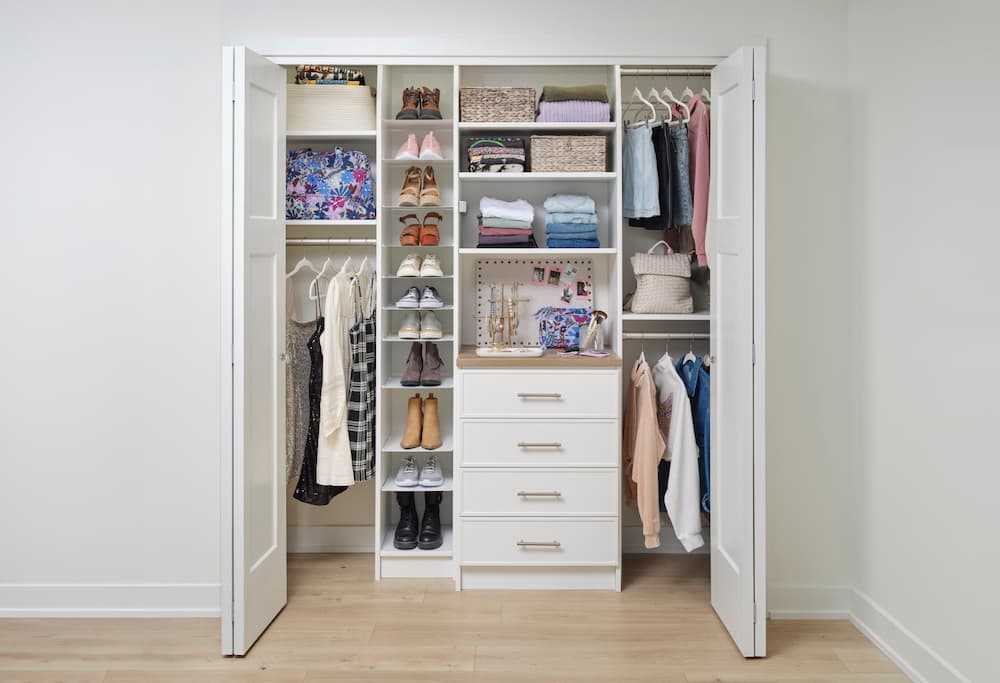
Step 1: Maximize the Space You Have
Do you have more hanging space in your closet than you need, but not enough room for your shoes and boots?
Homeowners often assume this happens because their closet is too small. In reality, the issue usually isn’t square footage, it’s the layout. When you step into an overstuffed, disorganized closet, your brain sees chaos instead of opportunity, and that visual clutter quickly turns into stress.
Maximizing space means intentionally using every inch, both horizontally and vertically. When your closet is customized to fit your specific wardrobe, each item has a dedicated place. The result? A clean closet with the breathing room you’ve been missing all along. And, you save considerable time when everything is visible, accessible, and easy to find.
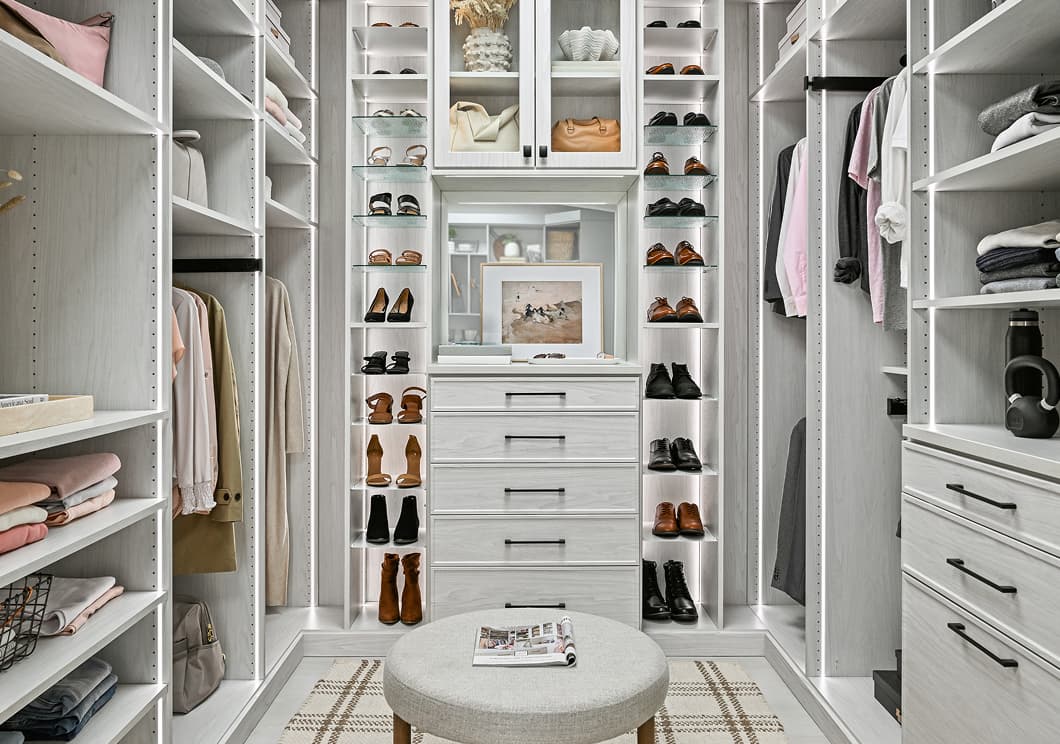
PRO TIP: Professional Designers Help Maximize Existing Spaces
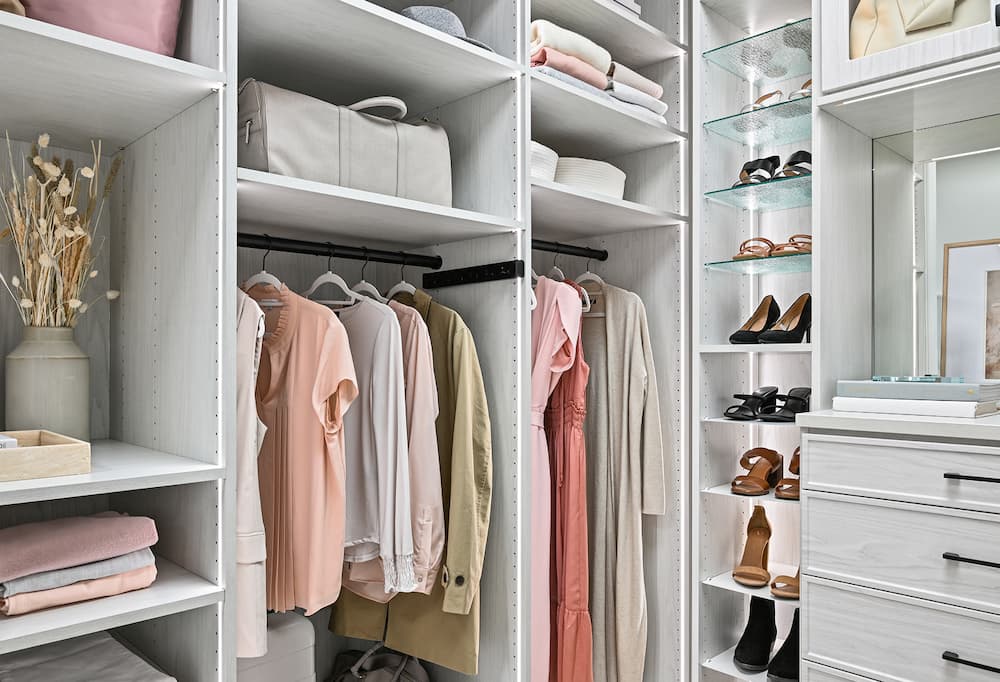
Closet design experts specialize in maximizing space and creating custom solutions to help you stay organized. Our designers don’t just offer advice–they work closely with you to create the exact storage system you want and need.
Step 2: Create Closet Organization to Support Your Lifestyle
Take a few minutes to think about how your routines impact what you store in your closet.
Are you an online shopper? Stay on top of returns with a package processing zone.
Do you travel often? Keep packing cubes and suitcases easy to access so you can quickly pack up and go.
Do you have clothes you never wear? Designate a shelf to collect things you no longer use, then donate them monthly or quarterly.
These are all things a closet design expert will talk you through to identify how to organize your closet and the custom closet storage features that will enhance the way you already live.
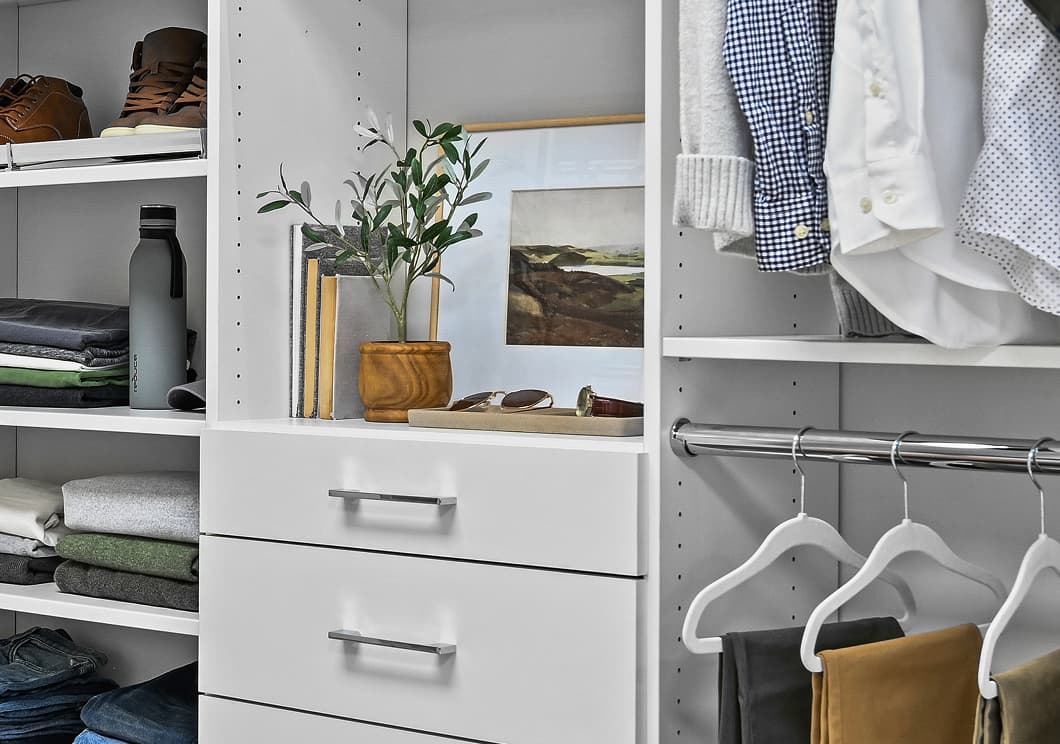
Step 3: Adopt Habits That Help You Maintain Order
Once you have a closet setup that’s optimized and personalized, it’s all about maintenance.
We asked Leslie McKee, co-owner of Inspired Closets Pittsburgh, about her top tips for spring cleaning and organization. She told us, “It’s important to recognize that organizing your closet is a process, not an event.” Meaning, organization isn’t a clear-cut, one time experience.
Leslie’s process consists of a series of exercises to practice over time. Take a look at her five clean closet tips so you can create your own spring cleaning routine that will quickly become second nature.


Meet Leslie McKee
Founder of McKee Organizing Services and Co-Owner of Inspired Closets Pittsburgh
Pittsburgher Leslie McKee is a professional organizer with a career spanning over 20 years. As an established industry leader on the local and national stage, Leslie is known for her masterful ability to quickly assess her clients’ needs and implement closet organization systems that create calm and relaxation, allowing homeowners to reclaim their spaces.
5 Exercises to Organize Your Closet–and Keep It That Way
Visualize Your New, Clean Closet
Leslie encourages her clients to create mental or physical pictures of spaces they love. For visual learners, a Pinterest board or even a tangible mood board can help clarify what you want.
Ask Yourself: “Do I like to shop my closet?”
Whether you like to make getting dressed as simple as possible with a slimmed down capsule wardrobe, or you prefer to have an abundance of options, it’s important to consider whether or not you actually enjoy spending time in your own closet.
It’s not only important that you love your clothes and accessories, but also that the layout and design of the space makes you feel calm, positive, and inspired, just like shopping in your favorite clothing boutique. If not, it’s time to consider a re-design.
Identify Your Organizing Style
In Leslie’s experience, most of us have one of the following styles:
Need to see it
You prefer to have everything out in the open where it’s easy to see.
Concealer
You have all kinds of stuff buried in your closet, including things that shouldn’t be there and items you forgot you own.
Collector
You’re always looking to grow or complete a collection, even if it’s full of items you’ll never use.
Tosser
You avoid the mess until it’s so overwhelming that you do a total closet cleanout, only to eventually buy replacements for the things you got rid of.
Assign a Category
Leslie says that one of the best ways to tackle closet spring cleaning is by assigning each of your belongings as an active, reference, or archive item. Here’s what she means:
Active Items
Things you use often.
- Gym clothes
- Your go-to jacket
- Everyday accessories
Pro Tip: Keep these items front and center.
Reference Items
Things you rarely use.
- Out-of-season items
- Formal wear
- Dressier clothes
Pro Tip: Move hanging items to the back of your closet and place folded items in drawers or on out-of-the-way shelves.
Archive Items
Things stored in a separate location.
- Wedding dresses
- Letterman jackets
- Sentimental pieces
Pro Tip: If the item makes you happy when you see it, keep it in place. Most pieces can be stored elsewhere, link the garage or attic.
Strategies to Get And Stay Organized
Determine what your definition of “enough” is for the items in your closet. For example, how many pairs of shoes are enough? Keep the number of belongings in check with these clean closet tips:
One In, One Out
Anytime you buy something new, remove something you already own.
Ask Yourself: “Would I buy this today?”
If an item is missing a button or has a stain, consider if you would buy it brand new today. If yes, then you know it’s worth repairing. If not, it’s time to get rid of it.
The Hanger Trick
Put items on hangers backward. As you wear them, place them back on the hanger facing forward. This lets you quickly see what you’re regularly wearing versus what you’re not reaching for.
Step 4: Keep It Clean
After you’ve maximized, organized, and adopted new habits to create order and structure in your space, it’s time to look ahead. Closet maintenance is so much easier when you set a regular–but realistic–cleaning schedule.